Monday, 17 October 2016

MAHARASHTRA KALEIDOSCOPE PHOTOGRAPHY CONTEST 2016-17


Maharashtra Kaleidoscope is an annual photography contest dedicated to highlight our beautiful and vibrant state of Maharashtra through photos! After the success of the contest last year with more than 800 entries, we are back again! This year The Western Routes is joined by Foglight Frames, Primes & Zooms and The Photogrpahy Club - MITSOB as our partners. 

Here are all the necessary details about the contest!

Categories
  • Nature & Wildlife
  • Built Heritage
  • People & Culture
  • Landscapes 
Entry Fees: FREE

Last Date for Submission: Midnight of 25 December 2016 IST

Email Your Submissions to 

For more information call 
9405591758, 7020723399


RULES & REGULATIONS

Pre-Qualification Criteria
  • Only images taken in Maharashtra will be eligible.
  • Participants are allowed to enter ONLY 2 images per category
Categories

Nature and Wildlife
  • Images depicting the wildlife of Maharashtra. This includes the diverse range of flora & fauna of the state.
  • Photographs of captive animals taken at zoos and recreational parks will not be considered as eligible.
  • Photographs of bird nests or any other photos which indicate disturbance to the species or ecosystem will not be considered eligible. 

Built Heritage
  • This category is specifically created for photographs which depict architectural heritage.
People and Culture
  • Fashion, family portraits and wedding photographs will not be eligible.
  • The ‘culture’ in this category refers to photographs taken during festivals and cultural events.
Landscape
  • Panoramic shots which do not fit the size and resolution specification will not be eligible
Submission of images
  • Submit your photographs by email to maharashtrakaleidoscope@gmail.com
  • Please submit photographs preferably in digital (jpeg/raw) format only. Files must be ideally full-size without borders, watermarks or signatures.
  • The last date for submission of all entries is midnight, December 15, 2016, IST.
  • Clearly mention your full name, postal and email address and contact number.
  • Image file names should include "photographer's name_subject name_location'. For example "Astha Desai_Tiger_Tadoba.jpg". 
Captions
  • All photographs must be accompanied by captions indicating clearly the equipment used, location, season, brief description of the subject and how the image was taken.
  • Captions must be added to each image's Properties Summary (Windows) or File Info (Photoshop) or as a separate Word file.
Size
  • Images for submission should be minimum 3200 pixels / 300 dpi (along the shortest dimension) with the aspect ratio 2 x 3 inches.  There is no restriction on the image size.
Manipulation
  • Images may be cropped (by 20 per cent) before submission, and limited digital manipulation such as cleaning, sharpening, adjusting levels, curves, colour and contrast is permissible when applied to the image as a whole.
  • Adding or removing elements is absolutely not permitted, nor is the combination of two different images (composites) allowed.
  • The original capture as it was recorded by the camera with no manipulation applied may be requested at any stage of the competition and must be sent to us when requested.
Ownership
  • The entrant must be the sole author and owner of the copyright for all photos entered. By entering the contest, the entrant certifies that the entries do not infringe on the copyright, trademark or intellectual property rights of any other person or organization.
Copyright and use of images
  • Copyright, even over winning images, will remain with the photographer.
  • The organizers, however, reserves the right to reproduce entries in its print and online pages with due credit to the photographer.
  • Some images may also be used elsewhere in connection with the promotion of the contest and the subsequent events like exhibitions etc.  
Entry Fees: FREE

Last Date for Submission: Midnight of 25 December 2016 IST

Email Your Submissions to 

For more information call 
9405591758, 7020723399


Thursday, 21 April 2016

Call of the Ocean


By Manasi Agavekar

With inputs from the travelogue written by Prajakta Ponkshe in Marathi

Travelling has always been one of my favorite hobbies but this trip was specially planned for my daughter Aarushi, who has recently finished IX standard exams, and within a week she was going to be engulfed by the challenges of ‘the dreaded X standard’. We both being nature enthusiasts, had zeroed in on a trip to Velas (a quiet village in Ratnagiri) that offered us a unique and ‘Animal Planet’ like experience of turtle hatching, and the release of baby turtles into the sea.

This is an amazing conservation project where the community of protection of this life form is managed by locals. The Olive Ridley turtles, a marine endangered species of the reptiles, lay eggs along the Maharashtra coastline at multiple places and incidentally, Velas is the place where most of the eggs are concentrated. For years, their eggs would be either stolen, eaten or sold. Besides fishing, hunting, pollution has been a major cause for their extinction. The Sahyadri Nisarg Mitra, an NGO funded from CSR initiatives, not only runs this conservation project but also offers an alternative source of livelihood to the locals through home stays for the tourists. Staying among the locals and living their lives was a new experience.


We set off on our journey on a mini bus with a group called ‘The Western Routes’ with about 13 people, on Friday at about 12:45 in the night. This was designed so that we have a maximum chance at sighting the turtles being released in to the sea. I invariably woke up multiple times throughout the night, because of the awkward position in spite of the seats having a push-back facility, whereas Aarushi had managed some sleep. We reached Velas at 6 am. The air was fresh and comfortably cold. It was still dark, and a small charming house was assigned to us as a home stay. It had three rooms with a neat bath and toilet facility, an elevated porch, and a backyard that was converted into a shack, which acted as our dining area. 

Before the starting of any trip, I had the usual inhibitions about the people that would make our group, the stay, the hygiene, the food, the overall experience, and here the most important thing whether we would get a chance at sighting the turtles. Well it loomed for a while, but as the morning tea arrived, we all stared interacting and a general sense of comfort began to set in. We immediately started for the beach where the hatchery is located. It was a tricky narrow path down the beach with the marshes of mangroves on one side and a few fields on the other.  The hatchery is in the form of an enclosure made of a net, on the beach where in the turtle nests were neatly arranged according to the date of hatching. It was actually towards the end of their breeding season but at least 15 nests were seen, that made all of us hopeful. The authorized people came to check on the nest at 7 am. But luck wasn’t in our fate that day as there was no activity of any hatchlings surfacing that time or even that day. We were completely disappointed, and didn’t know what to make of the situation. We had actually come all the way for that.

An Olive Ridley Turtle hatchling mmaking its way to the sea. Photo: Anshul Khandelwal

So we had an official introductory session, where we came to know about the names, the places and the professions of our fellow members. It seemed to me like very diverse set people. There were two foreigners, Sebastian, an IT professional from Argentina and Nazneen, a PhD student from Iran. And we all thought there was no chance of us being friends with them as they seemed quiet reclusive and kept to themselves. Later we realized that it was because Nazneen herself could not speak fluent English, nor was Sebastian very comfortable with the language. Few people of the group acted as translators for them so they could join in on the fun. Other people of the group were from Pune. I became close friends with a lady who was traveling with her 12-year-old son. Her name was Prajakta, an artist by profession. She had that knack of seeing art even in the smallest details and was an excellent photographer. Kishor, worked in the Oberoi chain of hotels as a regional sales manager.  He being from hotel industry, we had some common subjects, and we got along pretty well. Most of hobbies and interests matched. He was an art enthusiast and a talented dramatist. Another woman named Disha worked in a gaming firm as a data analyst was in the group.  She is a sweet and lovable was friends with everybody. The head of the group, Jayesh, was an enthusiastic and well-travelled man of many experiences. He had brought along his nephew, Reeshabh, who is an exceptionally talented classical singer. There were other people too, like the designer Gurbans, who is Punjabi, an excellent photographer, Shailesh and the fun-loving Kulkarni Aunty.

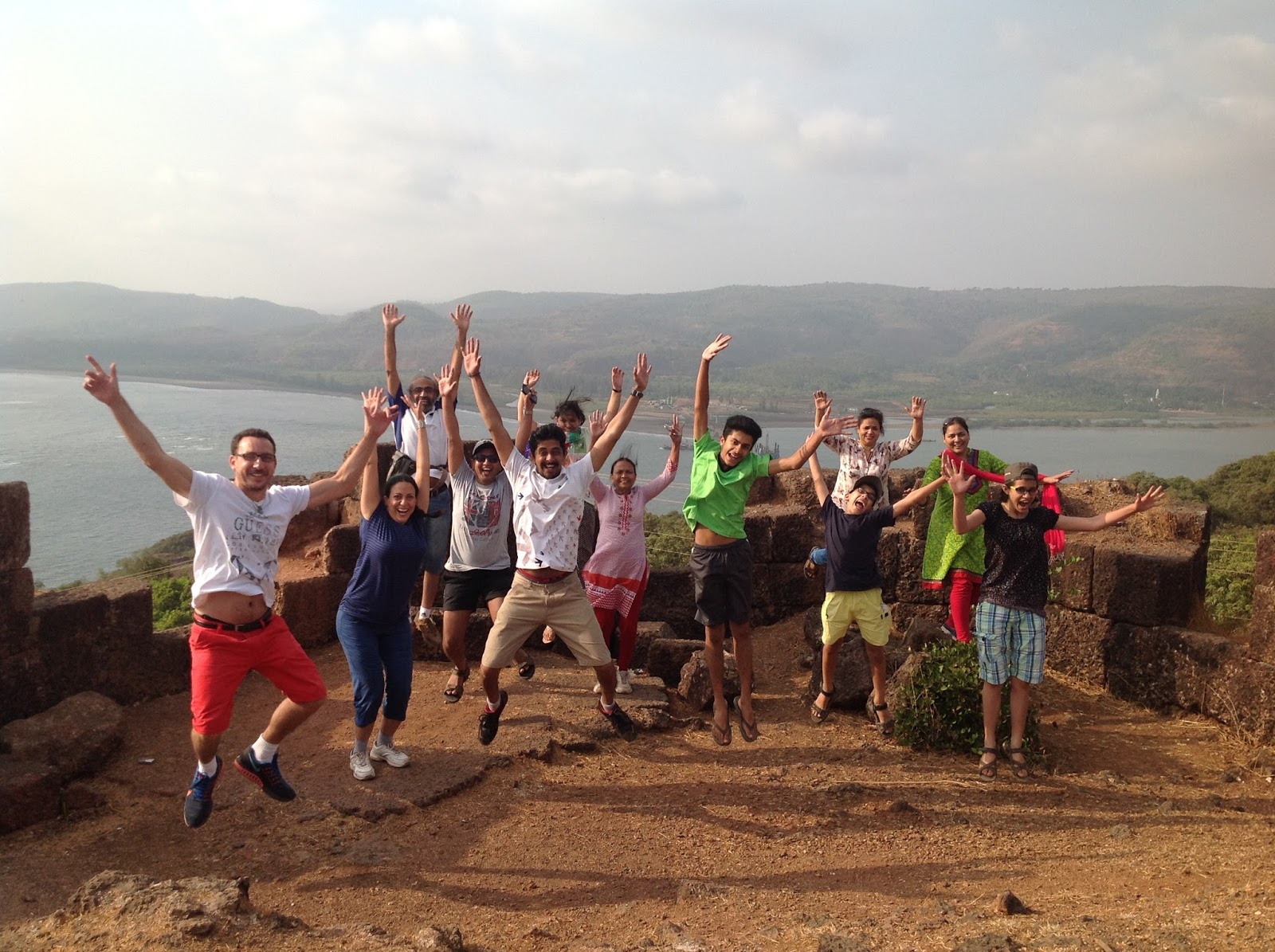
Our group atop Bankot Fort

The group became well-versed with each other only after lunch on the first day, when we played a game of relating the funniest moment of our life so far. This was the best ice breaking session I had ever experienced, there were more than 13 such incidences told, and we laughed our guts out for more than an hour. The comfort level with everyone was regulated. There was no awkwardness left anymore and we fit in with each other like we were age-old friends. One of the highlights of the trip was the constant humor. Not one dull moment passed in those two days. Even the people who couldn’t understand Marathi joined in when we were laughing because the joke was simultaneously translated by one member. 


Simple, home-cooked food at Velas

In the afternoon, we went for a ‘Heritage and Culture Walk’ in the village. For the two hours that we roamed in the mild sun, we opened up about the memories we had in the part of Konkan, which is inevitable for any Maharashtrian. The peace, the quiet, the serenity. We felt disconnected to our busy lives in Pune and we connected to our fundamental roots. The beautiful orchards of supari, coconut and mango trees bursting with birdsong, and our voices were the only sounds we heard.


Walking through the 'Supari' orchards was fun!

After that, we visited the fort Himmatgadh. It wasn’t a fort of great prowess, but it was an important one for Shivaji Maharaj and the Peshwas. Strategically placed at the meeting of the river Savitri to the sea and the sea coast, it was more of a watch-post rather than a full-fledged livable fort. It is still mostly intact. The sight was breath-taking and the climate was fantastic. The wafting sea-breeze, stunning views and the group photo sessions made the visit amazing. In the evening, after the third dose of tea, we set out for the beach again with hopes of seeing baby turtles. But luck was refusing to co-operate with us. Nevertheless, we had the share of the beach and the relentless sea. The glorious sunset compensated for the absence of the turtles. 


After returning ‘home’, the talented people among us showcased their skills that evening before dinner. Reeshabh sung some classical favorites which enchanted us. Kishor performed a part of Maharashtra’s cult favorite play Varhad Nighalay Londonla with outstanding skill and verve. After dinner, we went for a stroll on the beach for stargazing. Few people among us knew the sky well and we spotted huge constellations which are never visible in the city. While we were returning, there was no one on the road but us. We were technically very alone but the group of the thirteen of us didn’t let anybody feel that way.

After a good night’s sleep, we went on the beach once again early in the morning. There were depressions in the sand at the hatchery, which meant that the eggs were hatched but the hatchlings hadn’t made their way up yet. It was extremely frustrating but later, we made up for the lost turtles by seeing the pet turtle one of the villagers had. It was grown-up but it was a turtle. We then went for a ‘raft-ride’ in the nearby creek, which was awesome fun, even in the beating sun. After lunch, we bid adieu to this gorgeous little village and made our way to Shrivardhan. The bus ride was spent spotting trees and birds. In Shrivardhan, we loaded our bus in a ferry and made our way across the little canal. The ferry ride was short, just 7-8 minutes, but it was pleasant. 

In Shrivardhan we set off to place where vulture nest were in abundance, it was just a 10 mins walk from the hotel that we were to have lunch. This also was supposedly a conservation site because vultures aren’t considered holy by our community and so killed. But here also efforts had been taken towards conservation of these birds as they are an important part of our food chain. Locals had to educated and encouraged. Here we spotted more than 3 nests perched high up in coconut trees with numerous vultures looming around. Birding has always enchanted me, and this was indeed a special moment. Besides vultures this part of konkan is a rich with many more such birds, we were lucky to spot eagles and kingfishers.

After a hearty lunch of modak and ‘sol kadhi’, we then braced ourselves for a long ride back home. The ride didn’t seem so long because of the songs Jayesh was playing and the jokes we made constantly at every little thing. We then had an ‘ice-cream break’ after 2 or so hours of travel. The road seemed endless and we wanted it that way, but our coffee stop was the last meal we were going to have together. Prajakta teared up at the thought and everyone was gulping the reality: this is the end of the fun which seemed endless. The next hour or so, the verve of the group was dimmed.  


We made a Whatsapp group, shared our photos. We exchanged numbers and promised to stay in touch. One by one, we dropped off everyone near their homes. Reeshabh was the first one to get off and I and my daughter were the last ones. It was odd to sit by ourselves in the bus, the two of us, with only the sounds of honks and brakes. We got off near our home and it just felt so weird being in civilization after so long. 

Maybe, it is better being disconnected with the busy world, after all if it means connect with nature!

Monday, 18 January 2016

Best Entries - Maharashtra Kaleidoscope Photography Contest 2015 - People & Culture Category

Presenting some of the best entries from the 'People & Culture' category of the Maharashtra Kaleidoscope Photography Contest 2015.

Adwait Brahme | Baalpanicha kaal sukhacha! A playful moment between a warkari grandfather and his granddaughter caught on camera during the wari procession in Pune.

Akshay Ashok Palkar | Home is where your heart is. A lady was walking back home on a quaint evening at sunset was the perfect setting for a photo. Akshay underexposed and composed the picture to get the desired effect which was stunning!

Akshay Ingle | This image was captured during the Karnapura Mela which happens every year in Aurangabad, during the festival of Navaratri.

Alpesh Kumar Nagar | This contrasting picture shows a path between an old lady and a kid. The path between them is life’s journey. Each symbolizes the start and end point of a story called life.
Rahul Karandikar | Ganeshotsav is probably the most widely celebrated festivals in Maharashtra. A significance change in the Sarvajanik (public) Ganeshotsav since recent years is the active participation by the youth and women. A candid moment between two girls captured by Rahul on the last day of the festival!


Harshavardhan Ghorpade | The photograph shows a man holding a tally sheet for the fabrication workshop at Anandwan. This man, who is recovering from leprosy and has almost lost all fingers on one hand, is working at Anandwan and proudly earning his bread and butter instead of begging on streets!

Mahesh Lonkar | The biggest attraction at the Wari Sohala is the ‘Ringan’ (a circular pattern or arrangement which the pilgrims follow and in which various performances are organized). The ringan is a source of distraction and respite after long hours of walk for the warkaris.

Sayali Madkaikar | The dhol pathaks are an integral part of many festivals in Maharashtra in recent years. The photograph is captured at the right moment when the performers of the ‘dhwaj pathak’ perform on the rhythm of the dhol as the spectators gather around.

Sayali Madkaikar | This photo is captured during the Dahi Handi festival in Mumbai. Sayali perfectly captured the contrast of color and the unity as the boys take an oath before breaking the handi.


Nikhil Wadatkar | The small shops in old city present beautiful portraits of people submerged in their daily work. While on a heritage walk through the old city, Nikhil photographed this old man who was immersed in his daily chores at his work space.

Pankaj Bhagwatkar Rendezvous – Captured at the Mahatma Phule Mandai (vegetable market) in Pune. Pankaj writes, “Helping his thoughts to converse with the space, beginning a new day with new hopes”.

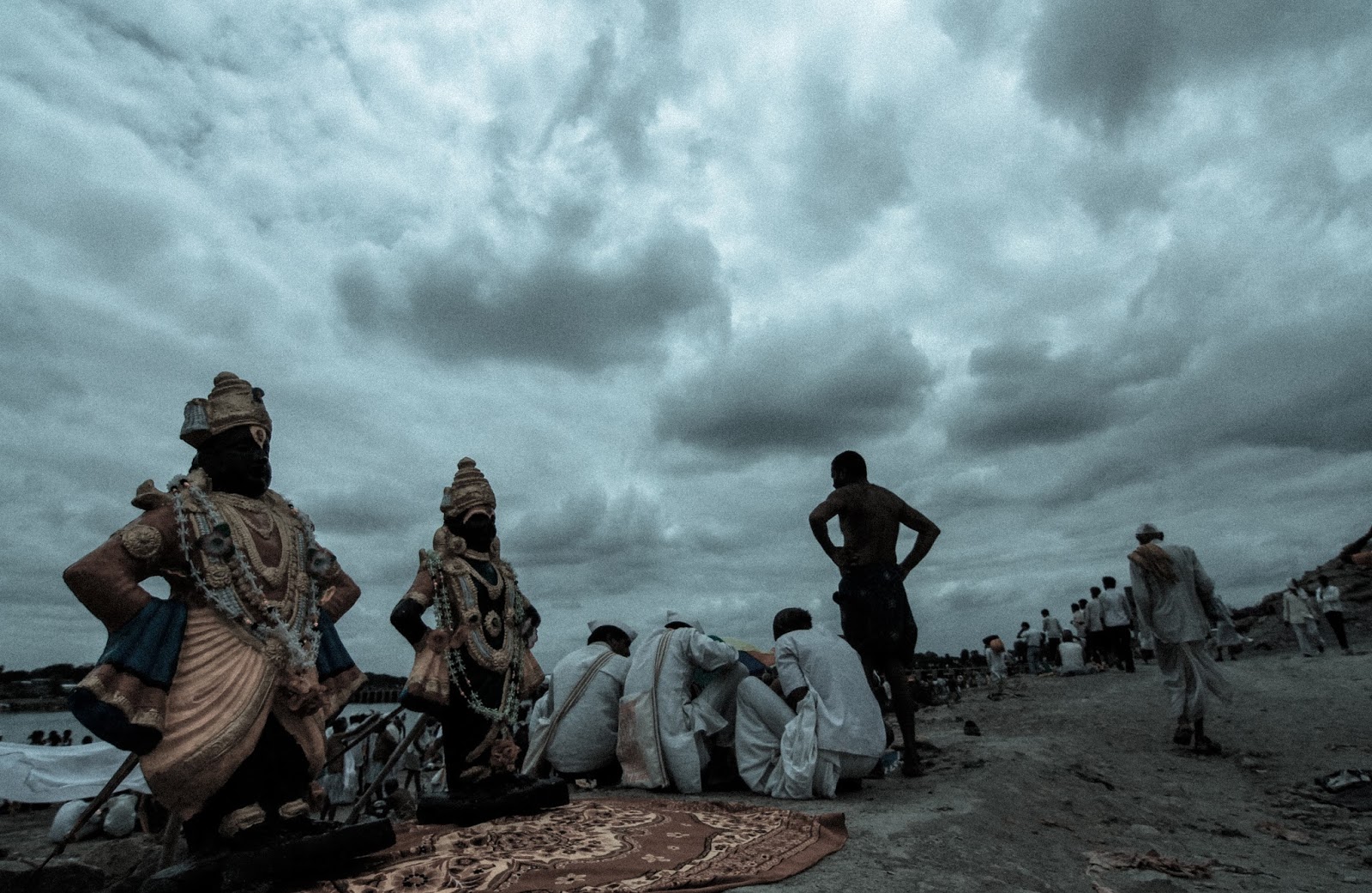
Prathamesh Vinod Ghanekar Hundreds of thousands people walk for several days to reach Pandharpur on Ashadhi Ekadashi to get a glimpse of ‘Vitthal-Rakhumai’. The photograph captures a person waiting to get a haircut from a street barber (not in the frame) who rests his fists on his waist, unknowingly re-enacting the posture of ‘Vitthal’ himself!

Rahul Bulbule | The image perfectly captures a yawning warkari, who has probably just started on the wari with the Tukaram Maharaj Palkhi from Dehu near Pune. The warkaris will eventually reach Pandharpur after 20 days of travel on foot!

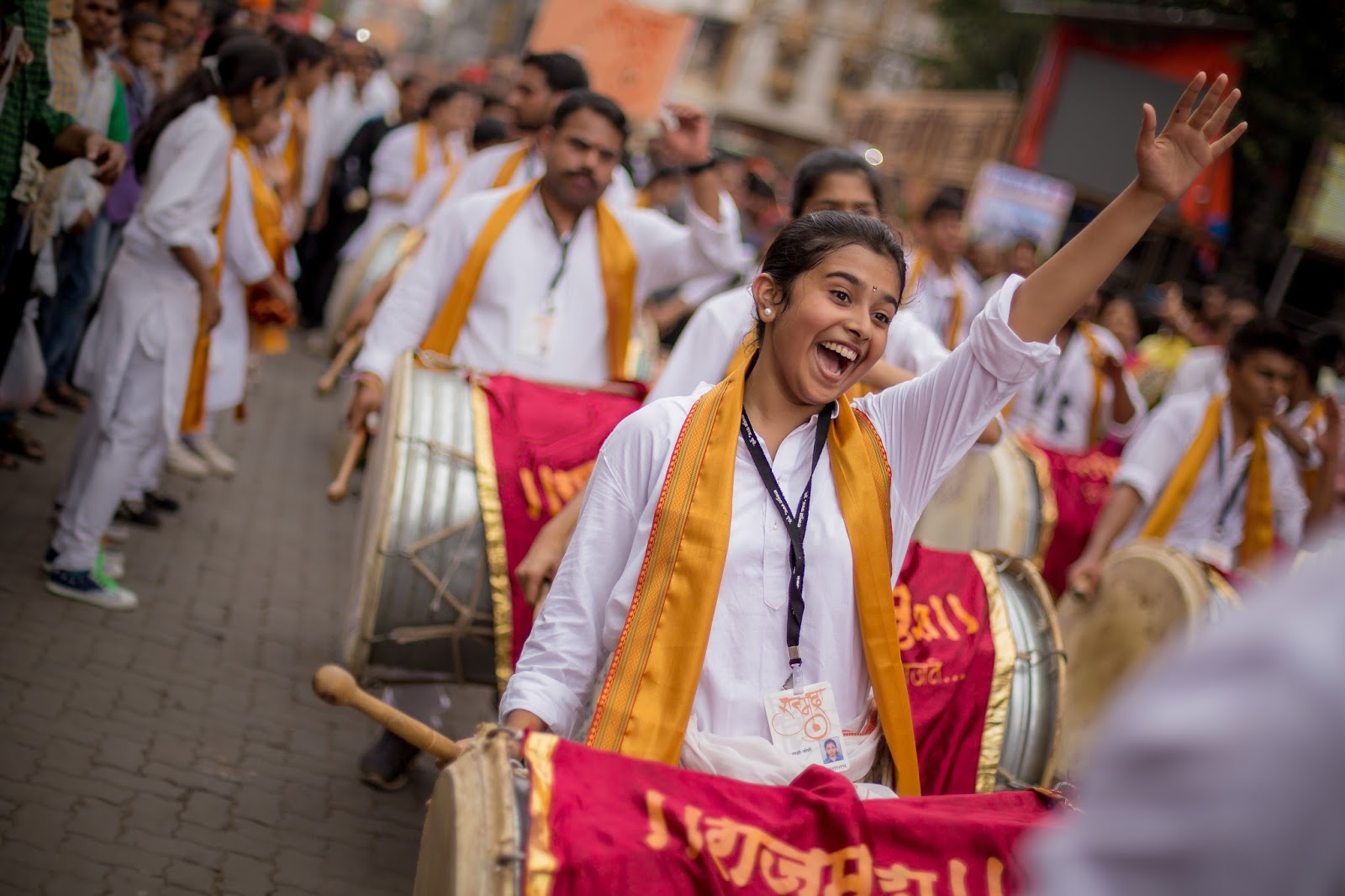
Rupesh Jadhav | The Ganpati Festival is probably the most celebrated festival in Maharashtra. The energy among people during Ganeshotsav is unmatchable. Rupesh has managed to capture this girl’s excitement beautifully as she prepares to perform the dhol during the last day procession.

Ruve Narang | The photograph beautifully captures a man busy washing clothes in the evening. The play of light, the droplets of water and the overall setting makes for a perfect frame!
Abhishek Pardeshi | This photo, taken in a village around Pabe Ghat near Pune represents a majority of farmers in the Western Ghats who are dependent on the annual monsoon for their one and only crop - Rice

Abhishek Pachore | Bullock-cart races are one of the most popular traditional sports in rural Maharashtra. These races are organized in different villages particularly in and around cities of Kolhapur, Sangli and Satara between August and March every year. These races are now banned by the Supreme Court, but implementation of the ban poses a big challenge for the police department and administration,

Neha Mandlekar | This picture was captured during the last day of the Ganesh Festival which is Anant Chaturdashi. During the idol immersion, the boy in the photograph leapt suddenly towards the idols and pulled out a red rose as a last farewell gift to his ‘Bappa’!

Wednesday, 23 December 2015

Winner Announcement - Maharashtra Kaleidoscope Photography Contest 2015

Winner Announcement


The ‘MAHARASHTRA KALEIDOSCOPE PHOTOGRAPHY CONTEST 2015’ is an annual photography contest dedicated to photographs taken in our beautiful and vibrant state of Maharashtra! The contest is being organized by The Western Routes.

We announced the contest in mid-September and officially closed the entries on 1 December 2015. We received tremendous response of an average of 150 photographs in each category. These categories were - Nature & Wildlife, Landscapes, Built Heritage and People & Culture. 

We appointed a jury to judge the best photographs in each category. We had Bhavpreet Ghai, HOD Photography of FX School, Mumbai and a professional photographer judging the 'People & Culture' category, Aditya Padhye, a Pune based wildlife photographer and film-maker judging the Nature & Wildlife and Landscapes categories and finally Peeyush Sekhsaria, an architect and photographer judging the ‘Built Heritage’ category. (More about the judges and their work at the end of the post!)

We proudly present our winners for 2015!


NATURE & WILDLIFE


LANDSCAPES


BUILT HERITAGE


PEOPLE & CULTURE


THE JURY

From Left to Right - Bhavpreet Ghai, Aditya Padhye and Peeyush Sekhsaria

PEOPLE & CULTURE 


BHAVPREET GHAI

Bhavpreet Ghai has spent more than 12 years in the front-line trenches with her camera, working on several successful projects across fashion, portraits and documentaries, all around the world from Mumbai to Melbourne. It was the artisan lanes and bohemian walls of Melbourne that reinvigorated Bhavpreet’s insatiable passion for photography, and she ultimately found a firm sense of belonging in a full-time career as a photographer. As a commercial photographer, Bhavpreet splits her time between travelling far and wide on photography expeditions, and working in Mumbai where she also happens to be Department Head of Photography at FX School. Her work can be viewed at www.bhavpreetghai.com | www.facebook.com/BhavpreetGhai 


NATURE & WILDLIFE | LANDSCAPES 


ADITYA PADHYE

According to Aditya Padhye, he is a self-taught wildlife and nature photographer. Most of his free time is spent in front of big furry (striped or spotted) cats and various colorful birds, shooting their antics. His ideal way to spend time is in his favorite space in the world, which happens to be a jungle somewhere with his camera in hand. He has recently ventured into the interesting and vast field of film-making and some of his upcoming works include some short films! His work can be seen at www.adityapadhye.com


BUILT HERITAGE 


PEEYUSH SEKHSARIA 

Peeyush Sekhsaria is an architect and geographer by training. An occasional photographer, his assignments include photographing the barefoot women architects of Niger, woodless construction in Burkina Faso and traditional fishing communities along the Indian coast. His has exhibited at the NCPA Mumbai, in France, Portugal, Colombia and Brazil. The book, ‘The Kailas at Ellora - A new view of a misunderstood masterwork’, which he photographed for was recently published. His work can be seen on www.peeyushsekhsaria.com


ABOUT THE WESTERN ROUTES

The Western Routes is a Pune based responsible travel company dedicated to providing travelers with unique tour experiences in beautiful and unexplored corners of Maharashtra. The state has a brilliant mix of high mountains, the refreshing sea and the lush green covers; interspersed with rich heritage, an ancient and lively culture, varied cuisine, royal history, and warm people! We plan long and short travel itineraries within Maharashtra. 

Every season we have scheduled various day or weekend trips which are open for all. Every month we also have free or self funded trips or excursions which are typically half day. Our other trips include customized educational and study trips, corporate and group tours, culture, heritage and food walks in Pune and travel events! 

More details on www.thewesternroutes.com
OR


Monday, 14 September 2015

MAHARASHTRA KALEIDOSCOPE PHOTOGRAPHY CONTEST 2015


The Western Routes is proud to announce 'MAHARASHTRA KALEIDOSCOPE', an annual photography contest dedicated to photographs taken in our beautiful and vibrant state of Maharashtra!

For the contest we have 4 categories

- Nature & Wildlife
- Built Heritage
- People & Culture
- Landscapes 

Here are the necessary details about the contest!


The entry to the contest is FREE

Last date for submission - Midnight of 1 December 2015 IST

For more information call 
9405591758, 9096458976

Email Your Submissions to 

More details on the Facebook Event: www.facebook.com/events/420013121456816/


RULES & REGULATIONS

Pre-Qualification Criteria
  1. Only images taken in Maharashtra will be eligible.
  2. Participants are allowed to enter ONLY 2 images per category
Categories

1. Nature and Wildlife
  • Images depicting the wildlife of Maharashtra. This includes the diverse range of flora & fauna of the state. 
  • Photographs of captive animals taken at zoos and recreational parks will not be considered as eligible
  • Photographs of bird nests or any other photos which indicate disturbance to the species or ecosystem will not be considered eligible.
2. Built Heritage
  • This category is specifically created for photographs which depict architectural heritage.
3. People and Culture
  • Fashion, family portraits and wedding photographs will not be eligible.
  • The ‘culture’ in this category refers to photographs taken during festivals and cultural events.
4. Landscape
  • Panoramic shots which do not fit the size and resolution specification will not be eligible
Submission of images
  • Submit your photographs by email to maharashtrakaleidoscope@gmail.com
  • Please submit photographs preferably in digital (jpeg/raw) format only. Files must be ideally full-size without borders, watermarks or signatures.
  • The last date for submission of all entries is midnight, December 1, 2015, IST.
  • Clearly mention your full name, postal and email address and contact number.
  • Image file names should include "photographer's name_subject name_location'. For example "Vikram Vyawahare_Tiger_Tadoba.jpg". 
Captions
  • All photographs must be accompanied by captions indicating clearly the equipment used, location, season, brief description of the subject and how the image was taken.
  • Captions must be added to each image's Properties Summary (Windows) or File Info (Photoshop) or as a separate Word file.
Size
  • Images for submission should be minimum 3200 pixels / 300 dpi (along the shortest dimension) with the aspect ratio 2 x 3 inches.  There is no restriction on the image size.
Manipulation
  • Images may be cropped (by 20 per cent) before submission, and limited digital manipulation such as cleaning, sharpening, adjusting levels, curves, colour and contrast is permissible when applied to the image as a whole.
  • Adding or removing elements is absolutely not permitted, nor is the combination of two different images (composites) allowed.
  • The original capture as it was recorded by the camera with no manipulation applied may be requested at any stage of the competition and must be sent to us when requested.
Ownership
  • The entrant must be the sole author and owner of the copyright for all photos entered. By entering the contest, the entrant certifies that the entries do not infringe on the copyright, trademark or intellectual property rights of any other person or organization.
Copyright and use of images
  • Copyright, even over winning images, will remain with the photographer.
  • The Western Routes, however, reserves the right to reproduce entries in its print and online pages with due credit to the photographer.
  • Images may also be used elsewhere in connection with the promotion of the contest and the subsequent events like exhibitions etc.  

Monday, 8 June 2015

7 'MUST-VISIT' PLACES AROUND PUNE DURING THE RAINS!

By Jayesh Paranjape

With the monsoon setting in, the Sahyadris surrounding Pune change colour and convert to a green haven. Hit any road going out of the city and within 20 minutes you are in paradise – lush green forest patches, waterfalls, rice fields and foggy & misty ghats. 


Photos: Vidyuth Singh
Here is our list of 7 'Must-Visit' Places Around Pune During the Rains. These destinations are perfect for a Sunday drive, a monsoon trek or probably a whole weekend away from the city! 

1. MULSHI


The Mulshi Lake | Photo: Vidyuth Singh
Just 40 km on the west of Pune, Mulshi is perfect to spend a rainy day with friends and family, eating kanda bhajis, bhutta and sipping on masala chaai. To reach Mulshi, from Pune, just take the road from Chandani Chowk via Pirangut, Paud and continue on the Mulshi Dam Road. The area is surrounded by the rugged mountains and forests of the Sahyadris and during and post monsoons, the area becomes lush green. Personally, the most striking feature of the area during the monsoons, are the numerous small and big waterfalls along the road. The Mulshi Lake in all its grandeur is visible throughout the road journey. During weekends, the area gets crowded, so the best way is to park your vehicle on the road and just walk your way to the lake and explore a new place. 

Mula River downstream from the Mulshi Dam | Photos: Vidyuth Singh

2. TAMHINI GHAT


The Kundalika Valley at Tamhini Ghat | Photo: Dhananjay Kulkarni
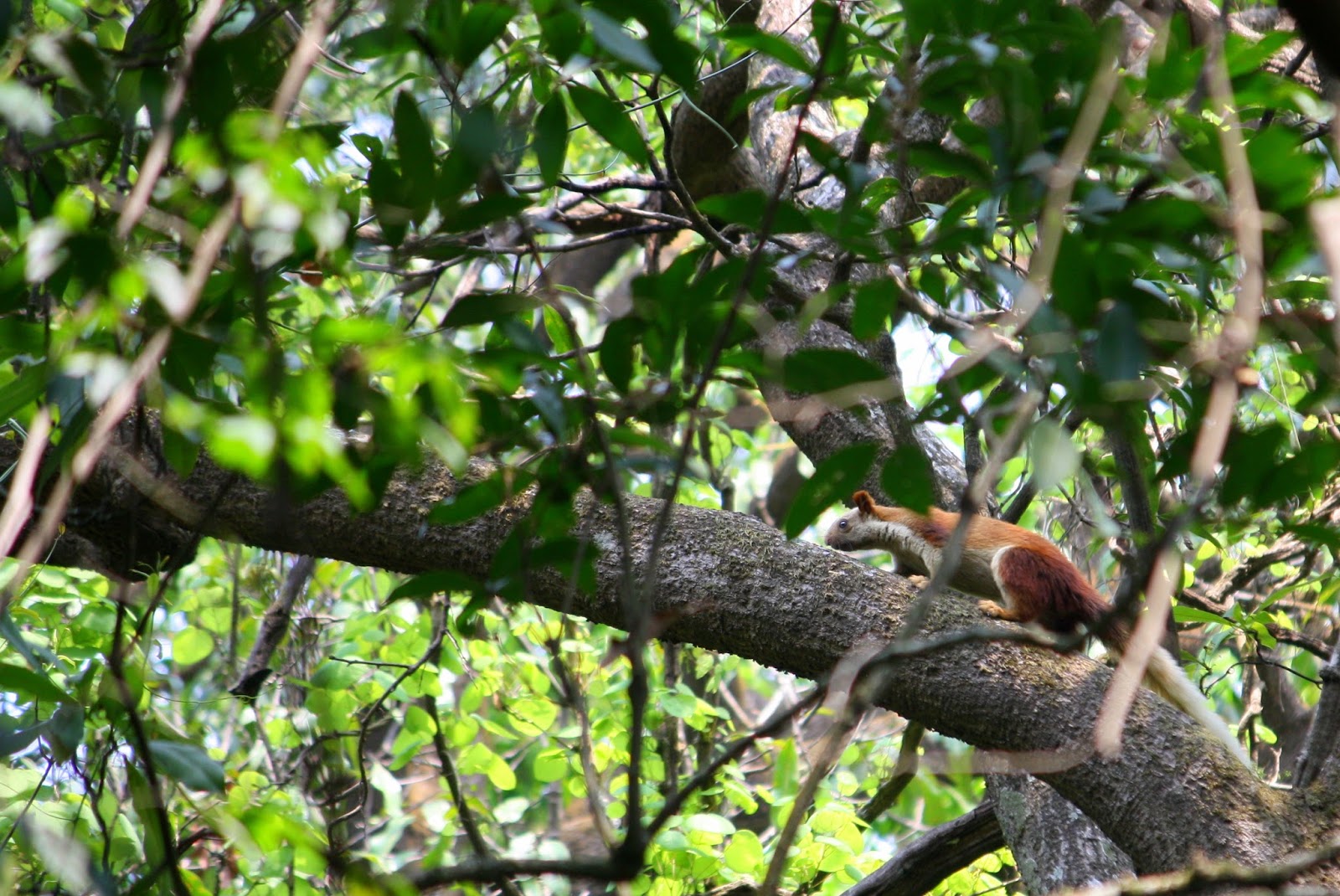
If you keep driving beyond the Mulshi Dam, you would pass through Tamhini Ghat. This road further meets the NH-17 (Bombay-Goa Highway) at Mangaon. The drive is through extremely dense and rich forest areas and plenty of waterfalls and is definitely worth an extended trip. Recently around 50 sq km of this area was notified as a wildlife sanctuary. Tamhini is wildlife heaven - birds, reptiles and amphibians in particular. Also worth a visit is the Kalika Mata mandir located inside a 'devrai' (Sacred Grove). If you venture a bit into the forest behind the temple, you might be lucky to see the rare Giant Squirrel!


Chai - The official drink of monsoon! | Photo: Sameer Tendolkar

3. TIKONA FORT


The stunning view from the fort | Photo: Dhananjay Kulkarni
Situated in the Maval region, around 50 km from Pune, Fort Tikona gets its name due to its triangular structure. Built at around 3500 feet above sea level, the hill and the fort makes for an easy trek. The well-marked trail goes past caves, temples, large doors cut into the rock surface and a massive vermillion Hanuman bust cut into the rocks with the devil, Panvati, under his feet. The final ascent called the Shivaji’s Trail, is through steep steps, but with steel ropes and railings to hold on to make it an easy climb. A few ruins of the fort along an algae-filled pond and a temple dedicated to Trimbakeshwar Mahadev is all that is there to discover on the top, but the vast Pawna reservoir and the spectacular view of the nearby forts of Tung, Lohagad and Visapur are totally worth it. 


The unusual Hanuman bust enroute Tikona | Photo: Dhananjay Kulkarni


4. AJIVALI DEVRAI


The walk to the Ajivali devrai is through numerous streams!Photo: Vidyuth Singh
Located near the Pavana Dam around 50 km from Pune, the Ajivali Devrai (sacred grove) is known for its astounding variety of flora and fauna. After Kolvan village near Tikona take a left turn which goes towards the Tung Fort where there is a small mud road which ends at the Ajivali village. The devrai is accessible through a beautiful hike from the village. The climb to the devrai is through numerous waterfalls and stunning views of the Tung, Tikona Forts and the Pavana lake. The devrai also has a temple dedicated to the Vaghjai devi who is believed to be the guardian of the forest! 


Typical Ajivali setting | Photo: Vidyuth Singh


5. MADHE GHAT


Madhe Ghat Waterfall | Photo: Anagha Bodas
Madhe Ghat is a place located around 70 km south west of Pune, bordering the Raigad district. It is in the vicinity of Torna Fort, Rajgad, Raigad Fort, and the backwaters of Bhatghar dam. To get to Madhe Ghat, hit the Mumbai-Bangalore highway (NH-4) towards Satara. At the Nasrapur phata take a right and follow the road to Velhe village and then to Kelad village. Madhe Ghat is about 850 m above sea level and situated in dense forests behind Torna Fort. This unknown gem is getting popular by the day for the superb views of the valley and one particular waterfall which drops for almost 400 feet into the Shivthar River in Konkan. The place has an interesting historical fact attached to it. When the Maratha warrior Tanaji Malusare died in the Sinhagad battle, his funeral procession was to taken via Madhe Ghat route for the last rites in his native village Umrathe near Poladpur.


Madhe Ghat | Photo: Anagha Bodas


6. BHIMASHANKAR


Gupt Bhimashankar | Photo: Preetal Chaudhari
If you are looking for a weekend getaway filled with patches of untouched evergreen forests coupled with some religion and culture then Bhimashankar is definitely the place to go. Bhimashankar is situated in the Sahayadri Hills and is just about 120 km from Pune city. The easiest way is to drive along the Pune - Nashik highway and take a left at Manchar and just follow the road leading to Bhimashankar. 

Once you have reached Bhimashankar, you first choice of place to visit by default would be the Bhimashankar temple. Built in the Nagara style of architecture, the temple dates back to the 18th century. It is one of the twelve ‘jyotirlingas’ (A shrine where Lord Shiva, is worshipped in the form of the lingam of light) in India. The temple is situated right in the heart of the forest and if you go beyond the temple along the river bed, and tolerate some amount of garbage on the way, you will enter the beautiful forest which is a part of the Bhimashankar wildlife sanctuary. The sanctuary was notified in 1984, primarily because it is among the very few forests in India which support a thriving population of the endangered and elusive giant squirrel. Known as ‘shekru’ in Marathi, the giant squirrel is also the state animal of Maharashtra. If you are lucky, you will be able to spot the beautiful giant squirrel particularly on the Gupt Bhimashankar trail behind the temple. Extremely shy the animal can be spotted due to its long bushy tail. But before it is seen, the giant squirrel is often heard. So keep your ears open for the animal’s loud repeated rattling call, which sounds like a firing machine gun! Apart from the shekru, the forests of Bhimashankar also offer excellent opportunities for spotting birds, reptiles, butterflies, plants and sometimes mammals like the barking deer. 


Giant Squirrels at Bhimashankar | Photos: Aniket Sayam
A small climb up from the parking lot and you at the Nagphani point, looking at the breathtaking surrounding mountains of the Sahyadri ranges, this is the highest peak in Bhimashankar. The uphill climb is totally worth the efforts and just cannot be described in an article. You need to experience it. 


The descend from Nagphani Point in Bhimashankar | Photo: Ameya Kolhe

7. MALSHEJ GHAT


Malshej Ghat | Photo: Saruvam
A charming hill station, placed at an altitude of 700 m above the sea level and famous for its numerous lakes, cascading waterfalls, and charming mountains, Malshej Ghat is a favorite tourist destination of hikers, trekkers, adventurers and nature lovers. It is at a distance of 130 km north of Pune. Though Malshej Ghat is beautiful throughout the year, monsoon brings an amazing charm to this place. During monsoons, the beauty and charm of Malshej is visible when it is under heavy fog and dark clouds. Close at hand is the Shivneri Fort, which is famous as the birthplace of Maratha king Shivaji. 

The monsoon is expected to hit Pune and around by mid-June! So take a pick and head out to experience the beauty of the Sahyadris! If you want to join a group and make new friends, join The Western Routes on our Monsoon Excursions, almost every weekend which start by mid-June and go on till September! More updates on our Facebook page or our website - www.thewesternroutes.com